Invisibly Visible
self-care
digital marketing

.png?width=48&height=48&name=youtube%20thumbnail%20(1).png)
Every child develops at their own pace—but when you're a parent, it's hard not to compare. Maybe another child is talking before yours, or walking sooner, and suddenly you're wondering if you should be worried. Those questions can feel overwhelming. The good news is that developmental milestones are meant to guide conversations, not create fear.
I know that feeling of checking the chart, scrolling through the milestone lists, and feeling that quiet anxiety bubble up. I’ve been there. As parents, we often find ourselves wondering if our child is "on track." We compare, we Google, we ask friends, and sometimes we quietly worry. Every child develops at their own pace, influenced by their personality, environment, opportunities for learning, and individual strengths. Developmental milestones are simply guideposts that help us understand how children grow and learn over time—not a checklist they must complete by a specific date.
At Invisibly Visible, we believe every child deserves to be seen for who they are, not just measured against a chart. Milestones are important, but so is understanding the whole child in front of you.
Developmental milestones are skills and behaviours that most children achieve within a general age range. These can include physical skills such as rolling, walking, and climbing, communication skills like babbling and speaking, as well as social, emotional, and cognitive development. While milestones help identify patterns of growth, there is often a window of time a skill is expected to learnt. Some children may walk earlier and talk later, while others may excel in communication before mastering physical skills.
Rather than focusing on whether your child is exactly where a chart says they "should" be, focus on whether they are continuing to learn, grow, and engage with the world around them. Development is not always linear, and progress can happen in bursts.
One of the most powerful ways children learn is through play. Play is not separate from learning—it is learning. Through everyday experiences, children build language, problem-solving skills, emotional regulation, social understanding, and confidence. Research consistently shows that play supports healthy cognitive, emotional, social, and physical development.
The good news is that you don't need expensive toys or structured activities to support your child's development.
Simple opportunities can include:
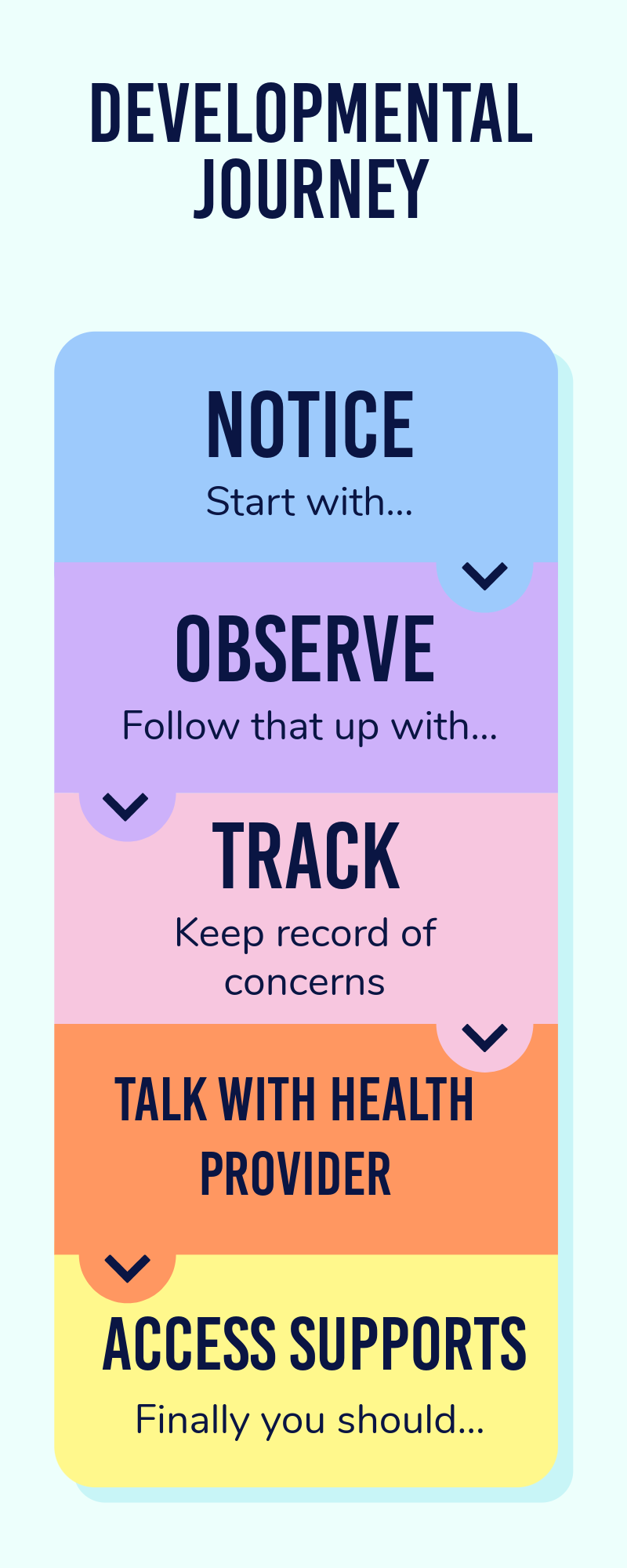
These moments may seem small, but they are often where the most meaningful learning happens. Children learn best through relationships, connection, and opportunities to explore. Most importantly, remember that seeking support is not a reflection of your parenting. It is an act of advocacy.
At Invisibly Visible, we know that behind every milestone chart is a child with their own unique story. Whether your child is meeting milestones right on schedule, taking a different path, or navigating additional challenges, their worth is not measured by a timeline.
Keep observing. Keep listening. Keep celebrating progress, no matter how small. Whatever path your child is on, you aren't walking it alone. This is a safe space and we’re in this together, and I’m so glad you’re here.
Because every child deserves to be seen.
Read more: Re-thinking 'red flags': Moving from fear to connection
Come along for the journey—listen, watch, and grow with me wherever you get your podcasts. Like & subscribe to join the IV League—where you’re not just a listener, you’re part of the story we’re building together.”